
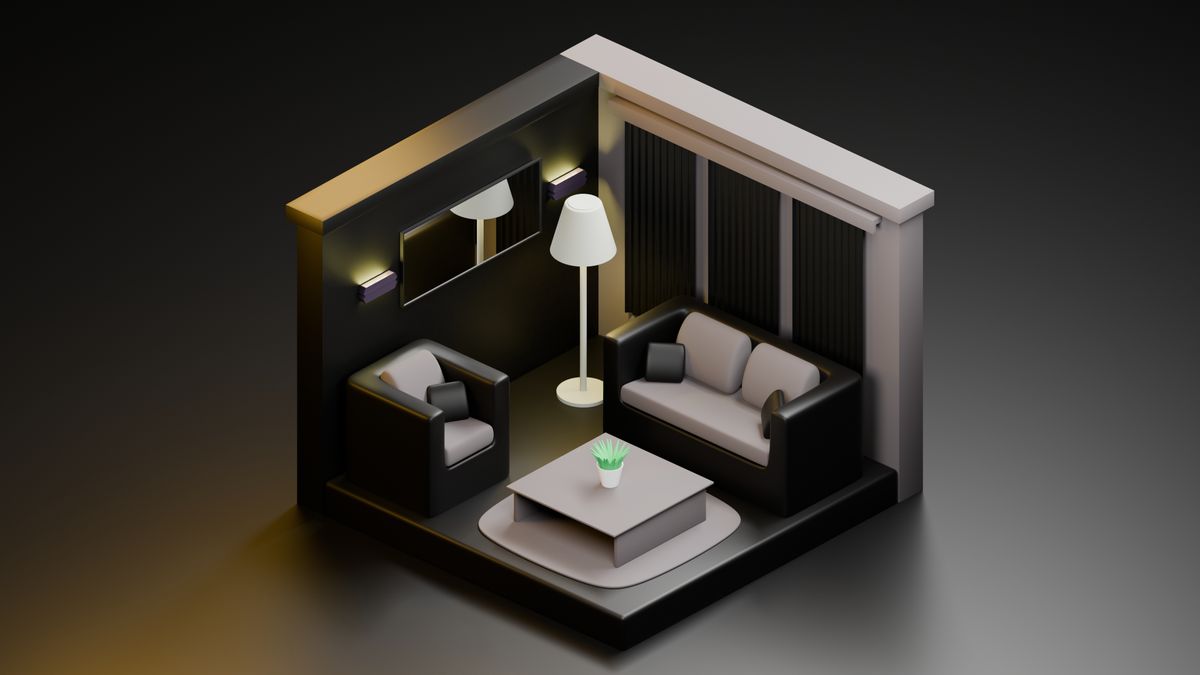
Good lighting is the difference between a room that works and a room you actually want to sit in. Yet most of us still rely on a single bulb in the middle of the ceiling, then wonder why the place feels flat at nine in the evening and faintly depressing at seven in the morning. Layering lighting is simply the practice of using more than one light source, at different heights and with different jobs, each one controlled separately. It sounds fiddly. It really isn't, and once you've tried it you won't go back.
A single ceiling light does exactly one thing: it floods the room from above. That means shadows under your chin, glare on every glossy surface, and no way to soften the mood without turning the whole room dark. It is also usually the brightest light in the house, which is the opposite of what you want after dinner.
Layering fixes this by giving you options. Instead of one switch that decides everything, you build a room where you can have a bright, functional space at 7am and a warm, low-lit corner at 10pm using the same furniture and the same bulbs. The trick is to think in three layers rather than one.
Most homes have the first layer only. Adding the second is the single biggest improvement you can make, and the third costs very little.
Layering only works if you can switch things on and off independently. If every lamp is plugged into one socket behind the sofa, you'll never bother.
Ignoring wattage and thinking in kelvins and lumens will transform your rooms. Kelvins describe colour temperature: 2700K is warm and cosy, 3000K is a soft neutral, and 4000K and above is crisp and blue-white. In a cosy home, almost everything should sit between 2700K and 3000K.
Lumens describe actual brightness. A bedside or shelf lamp is comfortable around 400 to 500 lumens; a reading lamp wants 700 to 800; a main ceiling light in a living room is usually plenty at 1,500 to 2,000 spread across the room. Keep the colour temperature consistent between layers — mixing a warm table lamp with a cold white ceiling bulb looks immediately wrong, and it's the most common mistake people make.
Once the layers are in, the whole point is that you change them through the day. Try this as a starting pattern.
In a studio flat or a narrow living room, layering does more work than it does anywhere else. Put lamps in corners rather than against flat walls — corners read as depth, and light in a corner makes the room feel wider. A slim floor lamp with an uplighter washes the ceiling and lifts the whole space without taking up floor you don't have. A small lamp on a narrow shelf or windowsill adds a layer without needing a table.
Keep cables tidy with adhesive clips or a shallow trunking run along the skirting, and consider a lamp with a rechargeable base if sockets are scarce — you can move it wherever the evening takes you. Finally, if you have a mirror, place a lamp so it catches the reflection. You'll get a second pool of light for the price of one.
Start with one extra lamp and one dimmer. Everything else can follow.

Hi, my name is Anthony kuber. I am artist and fashion designer.
I love to travel and writing blogging.
Your email address will not be published. Required fields are marked *
Software Developer & Writer
Hey, I'm Diva, a developer and writer blending code and creativity. I'm driven by a deep curiosity and a relentless pursuit of excellence. Join me as I craft digital solutions and captivating stories.


