
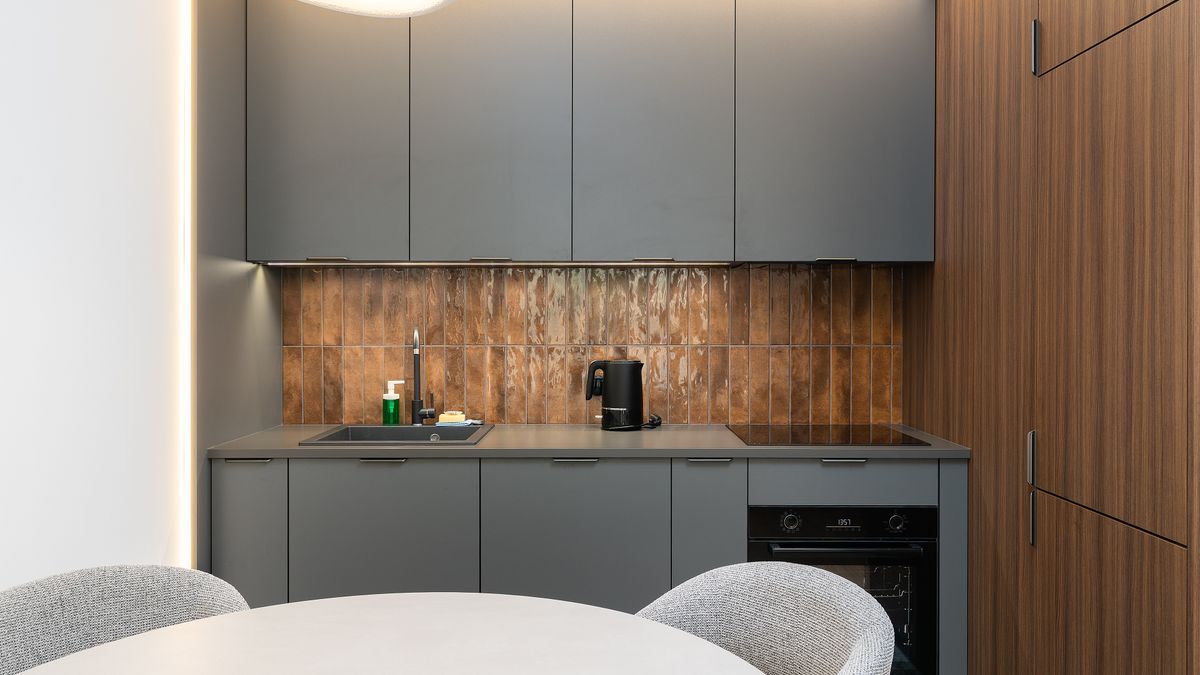
A home does not become comforting because of how much it cost or how neatly it is styled. It becomes comforting through repetition, familiarity and small acts of care. In a flat or a small terrace, where every object is visible and every corner does double duty, those details matter even more. The good news is that they are rarely expensive or complicated. They are simply deliberate.
Think about the first ten minutes of your morning. What do you touch? A mug, a kettle, a pair of glasses, a hairbrush. If any of those things live in an awkward cupboard or behind something else, you are starting every day with a tiny obstacle. Move them.
Keeping your favourite mug on an open shelf rather than at the back of a cabinet turns a functional act into a small pleasure. The same applies to the throw you use on the sofa, the book you are currently reading and the slippers by the door. In a small space, the trick is to give these everyday items a permanent, accessible home rather than shuffling them around. A single hook inside a cupboard door, a shallow basket beside the armchair, a tray on the hall table — these small allocations prevent clutter and make your home feel like it is cooperating with you rather than working against you.
Most of us have hundreds of photographs on our phones and almost none on our walls. Printing even a handful changes the character of a room. The trick is to put them where your eye naturally rests: beside the kettle, opposite the loo, at the bottom of the stairs, next to your side of the bed.
You do not need matching frames or a gallery wall. A mismatched cluster of five or six small prints in a narrow hallway can look far warmer than one large, careful arrangement. Consider these placements:
Faces you love, seen daily, do more for a room's atmosphere than any cushion arrangement.
Smell is the sense most directly tied to memory, and yet it is the one most often left to chance. A signature scent — one candle, one reed diffuser, one linen spray — used in the same spot at the same time of day builds a powerful association. Within a fortnight, that scent alone will signal to your body that you are home.
Be sparing. One scent per room is plenty, and in small flats it is best to keep the strongest one in the room you spend most time in. A few practical suggestions:
Rituals give shape to time in a small home, where one room often serves several purposes. Without them, the day blurs and the space starts to feel like a container rather than a refuge.
A ritual can be as modest as opening the window for ten minutes each morning, lighting a lamp rather than the overhead light at dusk, or clearing the kitchen table before bed so you meet a clean surface at breakfast. The point is not the activity itself but the repetition. In a studio flat, a clear table at night is the difference between waking up in a bedroom and waking up in an office.
Cosy does not mean cramped. In small rooms, comfort comes from purposeful layering rather than filling every gap. A narrow console behind the sofa, a slim shelf above a doorway, a stool that doubles as a bedside table — these give you function without eating floor space.
Keep at least one surface deliberately empty. An uncluttered corner, even a small one, gives the eye somewhere to rest and makes the whole room feel calmer. If you are short on storage, use vertical space for the things you rarely touch and keep the accessible spots for the things you use daily.
Overhead lighting flattens a room. Two or three smaller pools of light — a table lamp, a floor lamp, a warm bulb in a corner — create depth and warmth instantly. Choose bulbs around 2700K and avoid anything described as daylight in living areas.
Then add texture where you sit: a wool throw, a linen cushion, a woven rug underfoot, a wooden tray on a hard surface. Mixing materials softens sound as well as appearance, which matters in smaller rooms with hard floors. None of this needs to be new — a charity shop blanket or an inherited chair does the job just as well as anything bought in a hurry.
The thread running through all of it is attention. Display the photographs, keep the mug within reach, choose the scent, light the lamp. Do it again tomorrow. That repetition, not the shopping, is what turns a set of rooms into somewhere you properly want to come back to.

Hi, my name is Anthony kuber. I am artist and fashion designer.
I love to travel and writing blogging.
Your email address will not be published. Required fields are marked *
Software Developer & Writer
Hey, I'm Diva, a developer and writer blending code and creativity. I'm driven by a deep curiosity and a relentless pursuit of excellence. Join me as I craft digital solutions and captivating stories.


